The most important invention in your lifetime is…
One of the most difficult things to do in life for me is to wait patiently. It seems to be the common life lesson that pops up time and time again. Whether it’s waiting for people, businesses, or medical scans or test results, waiting is hard. I endure anxiety in the littlest of situations, but sometimes anxiety is legitimate in life or death situations and this is what causes trauma, or in my case, complex ongoing trauma.
Imagine that you find a small lump on your husband’s face and you have to wait for a doctor’s appointment, and then you have to wait for another appointment to do a biopsy, and then you have to wait for the results, and then your life starts hurtling on the longest, most stressful two years of medical treatment to save your husband’s life, all for it to end in death and the ultimate loss of love.
We have been lucky to have had some beautiful medical professionals who understood that anxiety though and would quite often call after hours with results so that we could be empowered with knowledge and be able to start wrapping our heads around what was to come next. It’s always better when a doctor or specialist nurse takes your case personally instead of treating you as a statistic or a customer number.
Steve’s cancer journey ended up being far more time consuming and full of travel and treatments than we could ever have imagined. We travelled to Orange in New South Wales (NSW) in hope to have Mohs Surgery but were referred onto Westmead Hospital in Sydney because the initial cancer was too rare and aggressive. We stayed in accomodation owned by the Uniting Church and spent many nights and days driving between Canberra and Sydney for surgeries or follow-up appointments. It was rough on Steve who had to endure the personal pain and suffering of cancer treatment, but it was also rough on me who had to do all the driving and nursing of him to help him recover from surgeries before going onto his first lot of radiation.
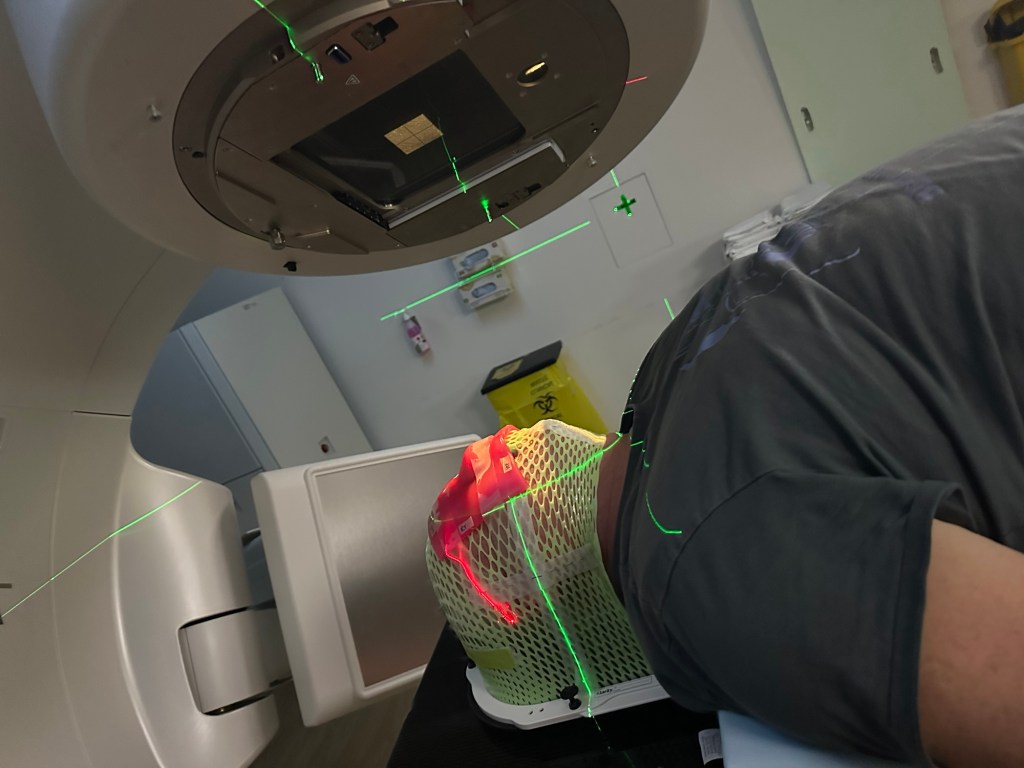
After the seven weeks of radiation, we had hoped Steve would be ok, but we ended up in emergency with Steve having continual choking problems and discovered he had stomach cancer. More waiting occurred, waiting for biopsies, PET scans, blood tests, and the like.
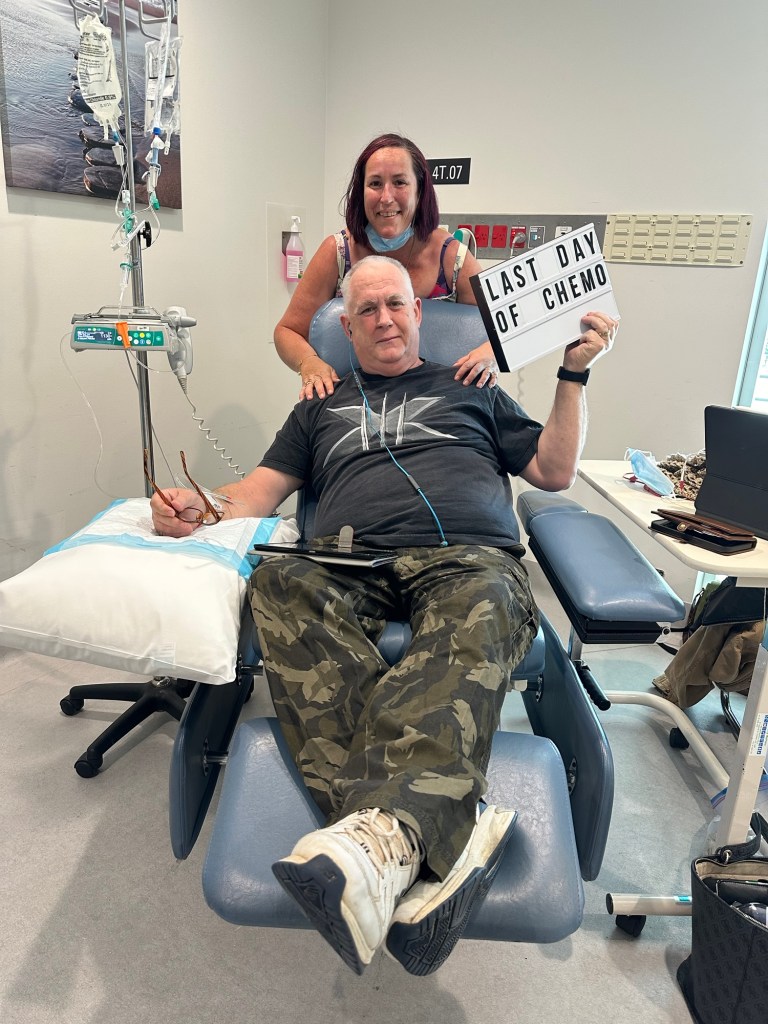
Steve ended up having concurrent chemotherapy and radiation to attempt to shrink the tumour which was blocking the pathway from the oesophagus to the stomach, and even had a feeding tube inserted into his duodenum prior to the treatment occurring because of the blockage. Life was not fun. We had nurses visit to care for wounds and the feeding tube, and they decided they would not have to visit so often if I was trained how to do the care myself. I have had more medical training in the last two years than I’ve ever cared to undertake, but I have also been a first aider for around 25 years so it was not something I wasn’t prepared to attempt or undertake.
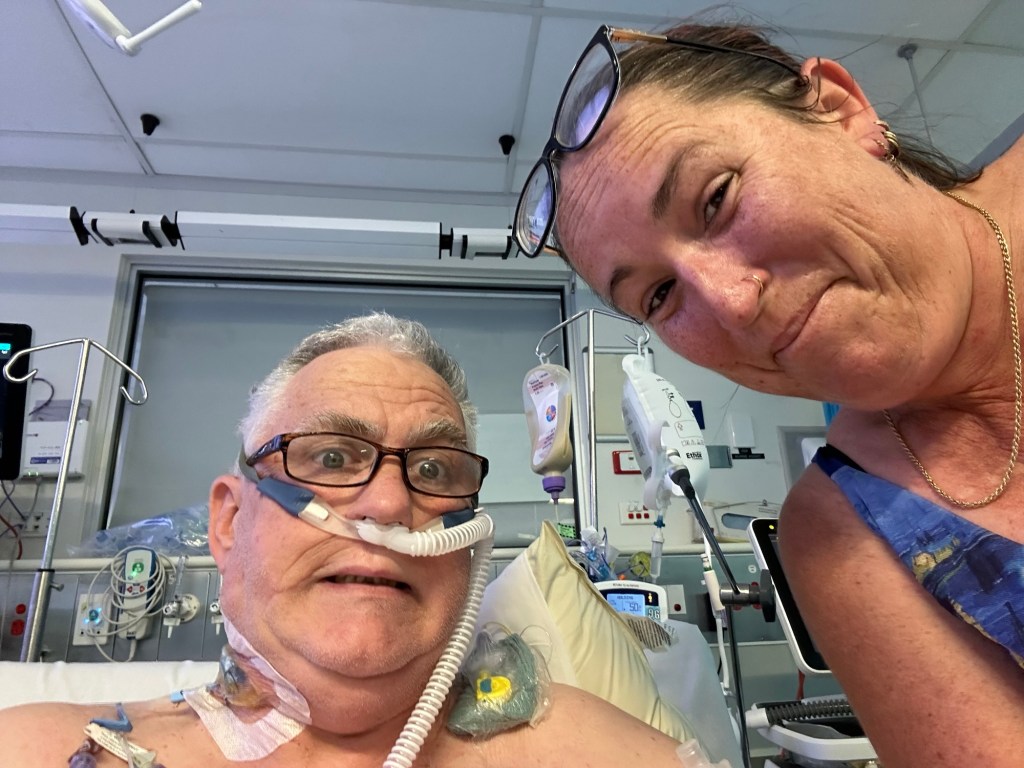
Steve had a massive surgery to remove half of his stomach and a portion of his oesophagus in January 2024. He spent two days in the Intensive Care Unit (ICU), and a further eight days on the ward. In hindsight, he felt he should have stayed in hospital for a further couple of days because it was such a huge surgery to recover from, but he was happy to be home in his own bed surrounded by his family.
During his time in hospital, I showered him, I put his compression stockings on, I fetched nurses for Steve and other patients, I went back and forth to eat dinner with the kids every night and make sure the household was still running in our absence, and my daughter and I would spend our night times after dinner bringing our knitting and crochet to the room to spend bed time with Steve and his room mates. We made some beautiful friends in that room who said their only nice time in hospital were those quiet nights talking and enjoying each other’s company. Those nights were special and I will always hold onto them.
Waiting for recovery from surgery is hard too. You spend so much time in hospitals or travelling to and from hospitals that it is hard to remember to be a person too. I took so much time off work during the last two years to care for him that I was always anxious about letting down my team. I was, however, showing up for Steve in ways that he needed me to every single day. I absolutely sacrificed myself for him but I would choose to do that again if I had to. He was always loved and always worth the personal sacrifice.
Then there was pain in his hip and he had to get more scans, but meanwhile I found him a really good osteopath to attempt to help him. Alas, it was metastatic stomach cancer that had spread into his bones. The chemotherapy, radiation, surgery, and follow-up immunotherapy that Steve went through did not cure him and he went from hope to terminal on a horribly life-shattering day in April 2024. We had held onto hope, and then all the joy left my life and the depression set in.
Steve went through further chemotherapy after the cancers were identified and the immunotherapy was halted. It was never going to cure him and was only ever an attempt to slow the cancer growth rate down. Steve handled it differently from me. I always wondered if it was a difference in understanding and medical information comprehension. He always thought he was going to beat the cancer and prove the doctors wrong. I tried so hard to hold onto his optimism, but the truth was that the medical profession has empirical knowledge about success rates and reactions to treatments, and if an oncologist gives you a prognosis with a timeline of life expectancy, they’re usually pretty accurate.
For me, I cried so many nights, often awake in the middle of the night to help nurse Steve or up with my own racing thoughts about future loss and becoming a widow. I suffered from anticipatory grief for a long time and it made living life hard. I stopped my nights out with my friends during that time and often found it hard to leave the house for anxiety that Steve would need help and I wouldn’t be on hand to give it quickly if need be. I rarely went to work through that time, and if I did, something would always go wrong at home. It was like clockwork.
We stopped the chemotherapy when Steve became eligible for a clinical trial and we started travelling to Sydney weekly again. The travel near killed me because it was so often and such a quick turn around most weeks, travelling the four hours there one day, and four hours back the next.
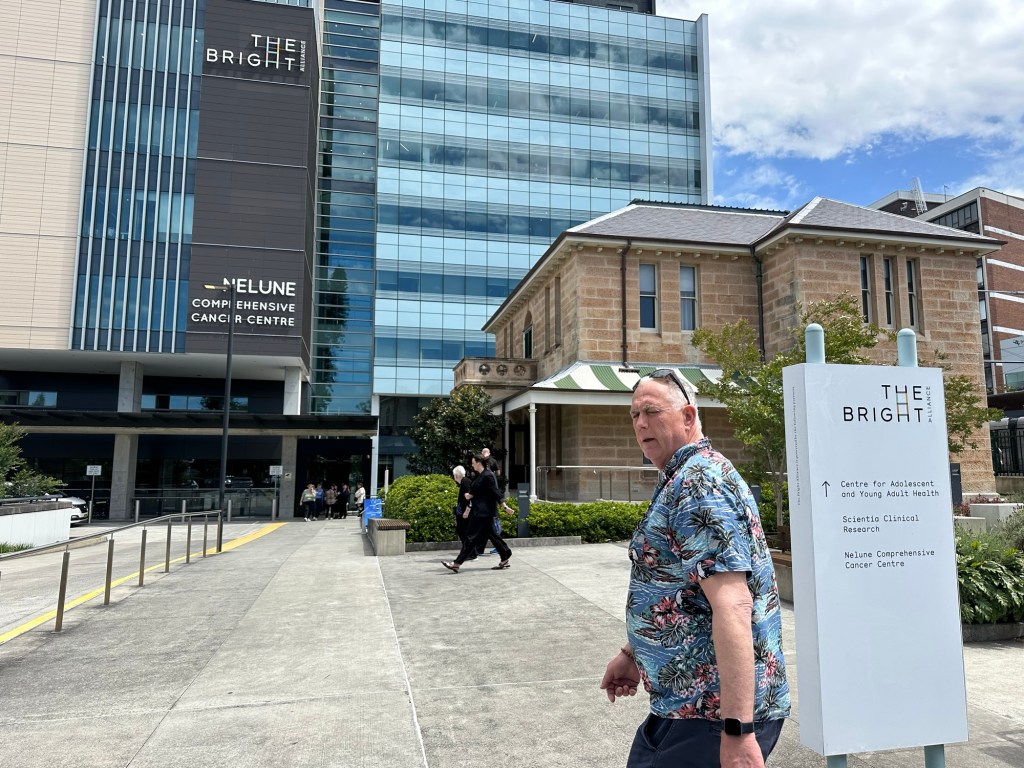
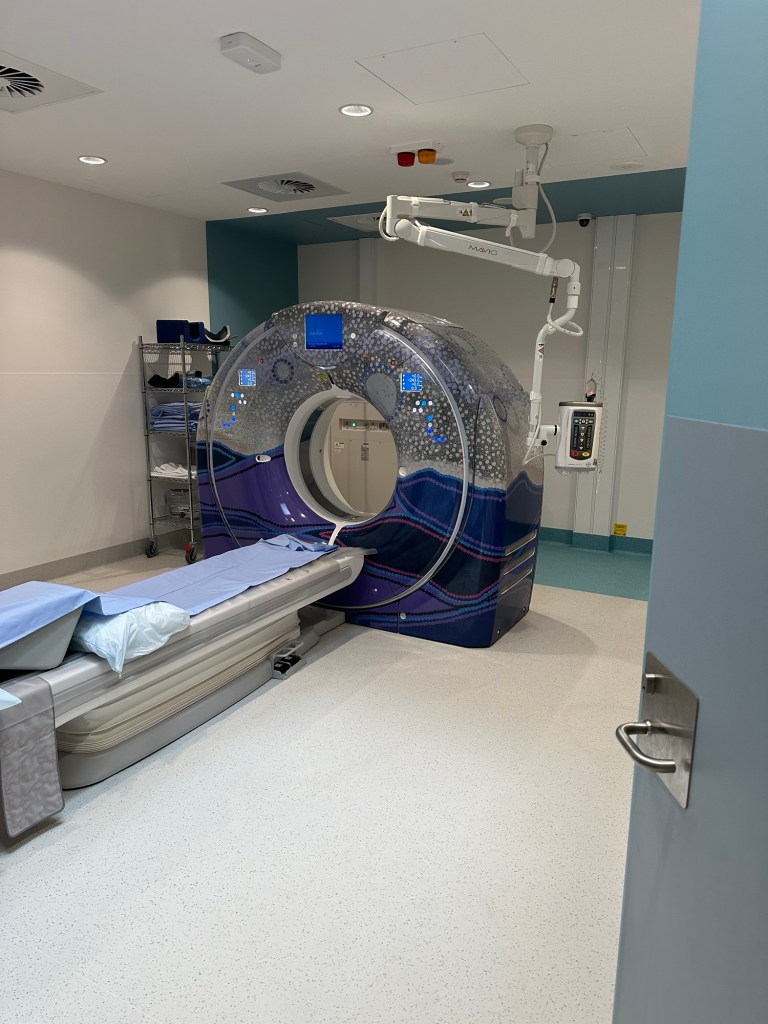
Waiting for scan results was quicker in Sydney which was a double-edged sword. On the 20th of December 2024, Steve had his last CT scan of the clinical trial and a bowel blockage was discovered. The radiographer was so concerned that they called the clinical trial doctors before even finalising the report. It was the start of the end and we both knew there was no return from this.
Steve passed away in January 2025 and his suffering ended that day. The initial prognosis of 9-12 months of life expectancy was right and he was gone nine months after being diagnosed with terminal cancer, bringing the cancer journey to an end and starting a journey of recovery and healing for the kids and I. He was finally out of pain and at peace which was all we ever wanted. No one should have to suffer the way he did or endure the treatments he put his body through.
The new technology that comes about with the medical profession is amazing. The innovation of scanning devices, the images they gain from them, the knowledge they learn from them, and how it can help assist in growing the knowledge base of cancer and other illnesses is unparalleled.
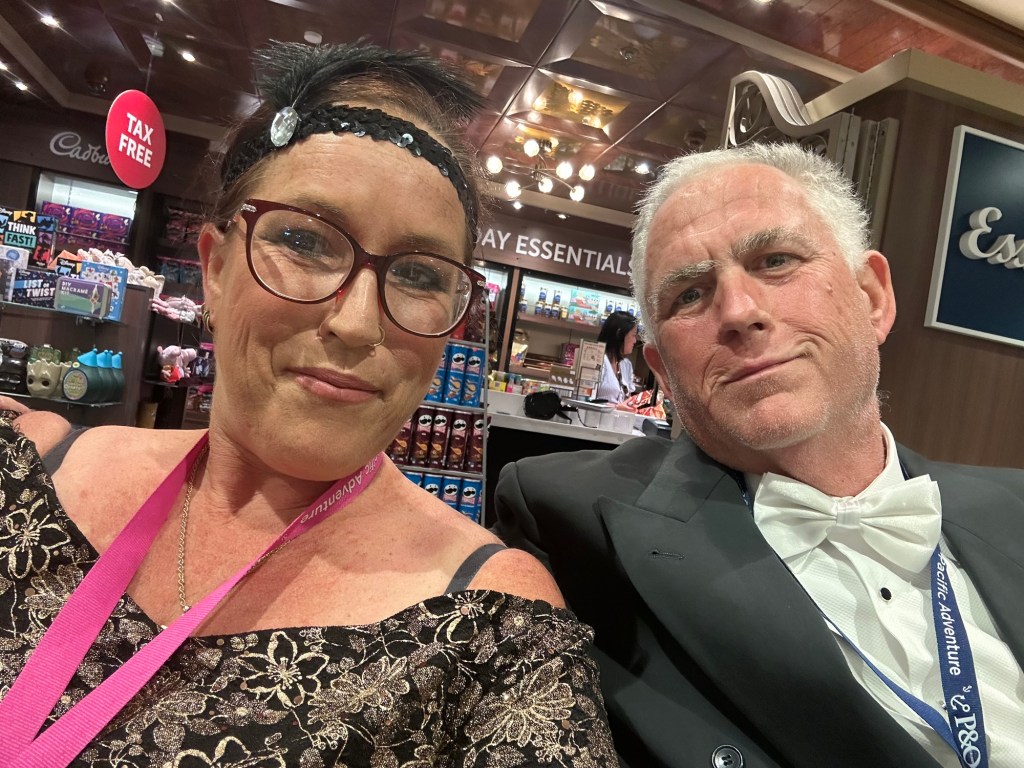
Whilst I grieve for the loss of my husband, I revel in the fact that we were always armed with knowledge about what was going on inside his body. I am sad, but also grateful that we were able to get to some beautiful bucket list items, such as a cruise that Steve had always dreamed about, and attending our daughter’s college graduation.
You cannot get out of this world alive, but there are some pretty cool inventions that can help arm you with information you need to manage the problems that you can possibly come up against in life. For now, I will leave you with this quote:
“The man who has anticipated the coming of troubles takes away their power when they arrive.”
Seneca
Until tomorrow, KT18Ø.
 Katie OneEighty